
The Science and Tradition of Intermittent Fasting in India
Intermittent Fasting (IF) is currently the world’s most popular health and fitness trend, but for the Indian subcontinent, it is a practice deeply rooted in ancient wisdom. From the ‘Vrats’ observed during auspicious days to the ‘Sattvik’ lifestyle of yogis, the concept of giving the digestive system a rest is thousands of years old. In 2026, we are reapplying this ancient knowledge through the lens of modern metabolic science to combat the lifestyle diseases prevalent in urban India, such as obesity, Type 2 diabetes, and chronic inflammation.
Understanding the 16/8 Method in a Desi Context
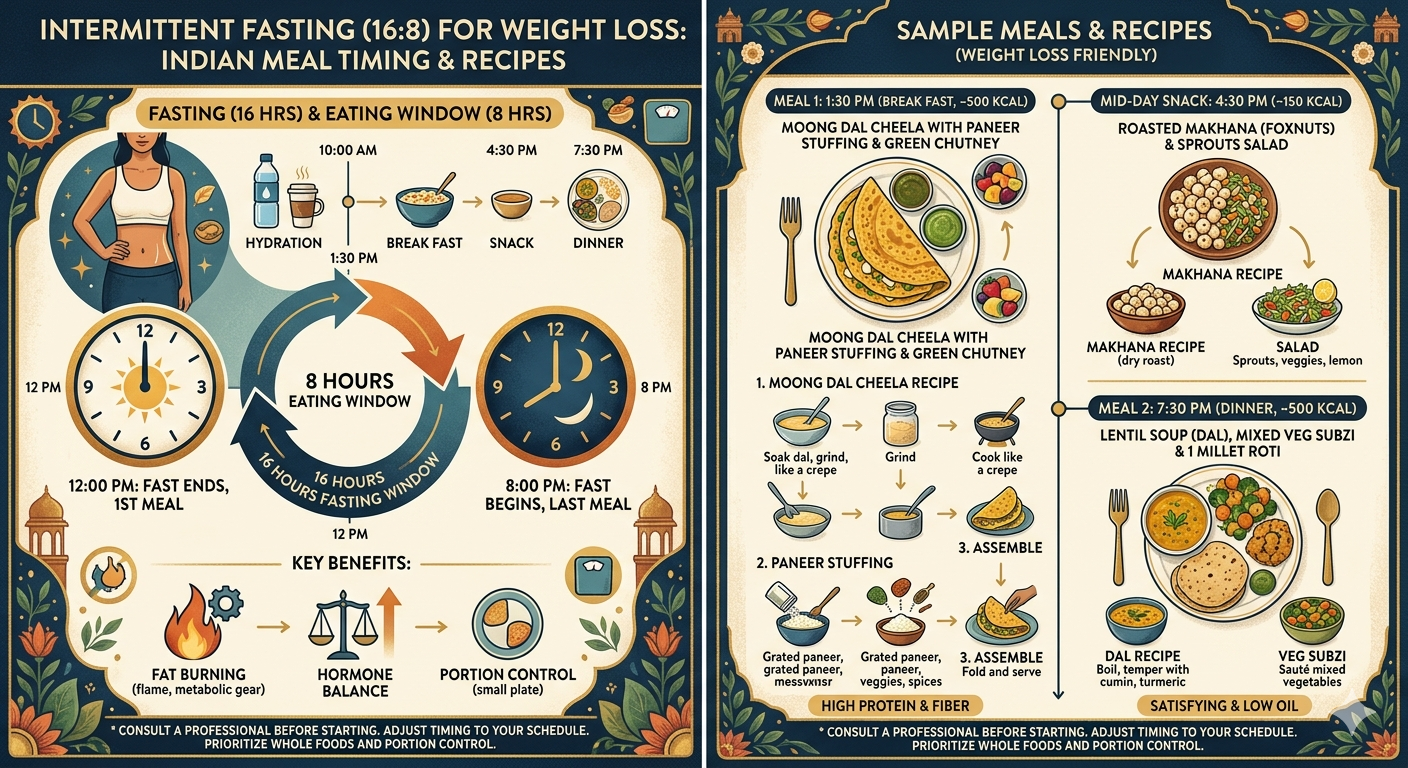
The most accessible and widely practiced form of Intermittent Fasting is the 16/8 method. This involves fasting for 16 hours and consuming all daily calories within an 8-hour window. For a typical Indian lifestyle, this might mean having your first meal at 12:00 PM (Lunch) and your last meal by 8:00 PM (Dinner). This effectively eliminates late-night snacking and high-carb breakfasts, which are often the primary drivers of weight gain. During the 16 hours of fasting, your body undergoes a profound shift from burning glycogen to burning stored body fat, a state that promotes sustainable weight loss without the need for extreme calorie deprivation.
The Biological Miracle: Autophagy and Cellular Repair
One of the most compelling reasons to practice IF is a process called **Autophagy**. Derived from Greek, it literally means ‘self-eating.’ When the body is in a fasted state for over 12-14 hours, it begins a cellular ‘housekeeping’ process where it identifies and recycles damaged proteins and old cell components. This is not just a detox; it is a fundamental repair mechanism that can slow down aging, improve skin health, and potentially reduce the risk of neurodegenerative diseases. For urban Indians exposed to high levels of pollution and processed foods, autophagy is a necessary biological reset button.
Hormonal Harmony: Insulin, Growth Hormone, and Norepinephrine
Intermittent Fasting is primarily a hormonal intervention, not just a caloric one. High insulin levels prevent the body from accessing fat stores. By extending the period of low insulin during a fast, you allow the body to tap into its energy reserves. Simultaneously, Growth Hormone (GH) levels can skyrocket during a fast—sometimes by as much as 5 times. GH is essential for fat burning and muscle preservation. Furthermore, the nervous system sends norepinephrine to your fat cells, breaking them down into free fatty acids that can be burned for energy, leading to an increase in metabolic rate.
The Indian Meal Window: What to Eat?
Breaking the fast is the most critical part of the process. In India, we often make the mistake of breaking a fast with high-sugar or deep-fried foods (like Jalebis or Pakoras). To maximize the benefits of IF, your 8-hour window should be filled with **Whole, Sattvik foods**:
- The First Meal (12 PM): Start with a probiotic-rich food like homemade curd to prime the gut. Follow this with a balanced meal consisting of complex carbs (like hand-pounded rice or millets), high protein (Dal, Paneer, or Sprouts), and healthy fats (Ghee).
- The Evening Snack (4 PM): Reach for nuts, seeds, or a piece of fruit. Avoid the traditional sweetened ‘Chai and Biscuits’ which can cause an insulin spike mid-window.
- The Last Meal (7:30 PM): Keep it light but satiating. A vegetable-heavy soup, a small portion of Moong Dal Khichdi with extra vegetables, or a grilled paneer salad are excellent choices.
Psychological Resilience and Mindful Eating
Beyond the physical benefits, IF is a masterclass in psychological discipline. In a world of ‘food on demand,’ learning to distinguish between true physiological hunger and emotional cravings is transformative. Many practitioners in India report that after the initial 7-10 day transition period, their ‘brain fog’ lifts, and they experience a level of mental clarity and focus that was previously unattainable. It teaches you to view food as fuel rather than a response to boredom or stress.
Common Myths and Challenges in the Indian Household
One common concern in Indian families is that skipping breakfast leads to ‘weakness’ or ‘acidity.’ Science shows the opposite: your body is perfectly capable of maintaining energy levels through gluconeogenesis, and acidity is often a result of *what* you eat (oily/spicy foods) rather than *when* you don’t eat. Another challenge is the social pressure during family dinners. The key is flexibility—if you have a late wedding dinner, simply shift your eating window the next day. IF is a lifestyle, not a prison sentence.
Conclusion: Embracing the Path of Balance
Intermittent Fasting is a return to our biological roots. By aligning our eating patterns with our internal circadian rhythms, we can unlock a level of health that no supplement can provide. Whether your goal is weight loss, better blood sugar control, or simply a longer, healthier life, Intermittent Fasting offers a scientifically backed, traditionally rooted solution for the modern Indian. Start slowly, be consistent, and watch your body transform into its most efficient version.