
The Rise of the Desi Keto: Why Indian Vegetarians are Choosing Low-Carb
The Ketogenic diet, traditionally associated with meat-heavy Western meals, has found a vibrant new home in the Indian kitchen. For the Indian vegetarian, the challenge of ‘Keto’ has always been the cultural reliance on grains like rice and wheat. However, in 2026, we are witnessing a nutritional revolution where traditional Vedic wisdom meets modern metabolic science. The Indian Vegetarian Keto Diet is not just about weight loss; it’s about reversing insulin resistance, boosting cognitive function, and reclaiming energy levels that were often bogged down by high-carb, processed vegetarian meals.
The Science: What is Ketosis?
At its core, the Keto diet forces your body to switch from its primary fuel source—glucose (from carbs)—to ketones (from fat). For an Indian vegetarian, this means drastically reducing the intake of Chapatis, Rice, and sugar, and replacing them with high-quality fats like A2 Desi Ghee, Butter, and heavy cream. When you enter ketosis, your liver starts breaking down fat into ketones, which are a much cleaner and more efficient fuel for your brain. This transition usually takes 3 to 7 days, during which your body undergoes a profound metabolic reset.
The Indian Keto Pantry: Essential Ingredients
To succeed on an Indian Keto diet, you must rethink your grocery list. The hero of the kitchen is **Paneer**. Rich in fat and protein, it is incredibly versatile. Next is **Desi Ghee**, which is not only keto-friendly but also supports gut health through butyric acid. For fiber and ‘bulk,’ we use **Cauliflower** (Gobi), which can be grated to make ‘rice’ or mashed as a potato substitute. **Almond Flour** and **Coconut Flour** become the go-to for making keto rotis. Don’t forget **Avocados** and **Walnuts**, which provide essential Omega-3 fatty acids that are often lacking in a standard vegetarian diet.
A 7-Day Sample Meal Plan Strategy
Success on Keto is 90% preparation. Here’s a breakdown of how a typical day looks:
- Breakfast: A bulletproof coffee (black coffee with ghee and MCT oil) or a paneer-stuffed bell pepper. This ensures you stay full until lunch without an insulin spike.
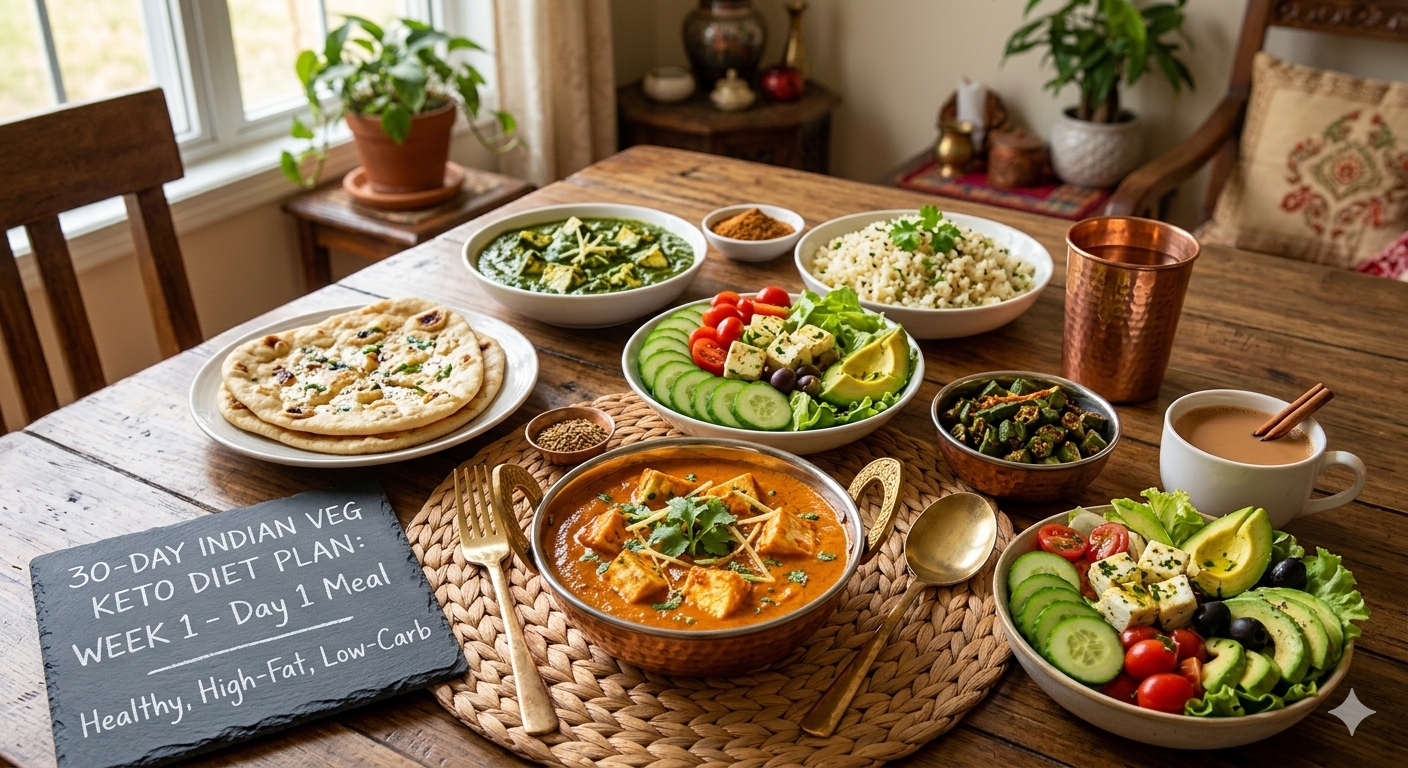
- Lunch: A big bowl of Palak Paneer (spinach and cottage cheese) cooked in generous amounts of butter, served with a side of cucumber salad and a keto almond flour roti.
- Snack: A handful of roasted almonds or a piece of high-fat cheese.
- Dinner: Grilled mushrooms with broccoli and a heavy cream sauce, or a cauliflower ‘biryani’ loaded with nuts and ghee.
Overcoming the ‘Keto Flu’ in an Indian Setting
As your body sheds excess water during the first week, you lose electrolytes. This can lead to headaches, fatigue, and irritability—collectively known as the ‘Keto Flu.’ In India, we have a natural remedy: **Pink Himalayan Salt in Lemon Water (Nimbu Pani)**. Drinking this 2-3 times a day is crucial. Additionally, ensuring you get enough magnesium through leafy greens like Methi (fenugreek) and Bathua can mitigate muscle cramps. Patience is key; once you cross this hurdle, the mental clarity and energy surge are unparalleled.
The Protein Problem: Getting it Right Without Meat
One of the biggest critiques of vegetarian keto is the perceived lack of protein. While paneer and cheese are great, you should also look into **Whey Protein Isolate** (ensure it’s low carb) and **Hemp Seeds**. **Tofu** and **Tempeh** are also excellent additions for variety. It’s important to balance your protein intake—too little will cause muscle loss, while too much can (in rare cases) kick you out of ketosis through a process called gluconeogenesis. Aim for about 0.8g to 1g of protein per pound of lean body mass.
Traditional Spices: The Keto Advantage
Indian cuisine is blessed with spices that are metabolic gold. **Turmeric** (Haldi) reduces the inflammation that often accompanies a high-sugar lifestyle. **Cinnamon** (Dalchini) helps regulate blood sugar, making the transition to keto smoother. **Ginger** and **Garlic** support digestion, which can sometimes be sluggish when moving to a high-fat diet. Using these spices generously not only makes keto food delicious but also doubles down on the health benefits.
Long-term Sustainability and ‘Cheat’ Management
Keto should not be viewed as a ‘crash diet.’ it’s a tool. Many Indians find success with ‘Cyclical Keto,’ where they stay strictly keto for 5-6 days and have a slightly higher (but still healthy) carb intake on the weekend. This allows for social meals and prevents metabolic adaptation. When you do have a ‘cheat’ meal, don’t panic. Simply return to your high-fat protocols the next morning and incorporate a short 16-hour fast to accelerate your return to ketosis.
Conclusion: A New Chapter of Health
The Indian Vegetarian Keto Diet is a powerful way to break the cycle of carb addiction. By embracing fats, prioritizing paneer, and utilizing our rich heritage of spices, we can achieve a state of health that was previously thought impossible for vegetarians. Start small, track your macros, and listen to your body. The transformation is waiting.