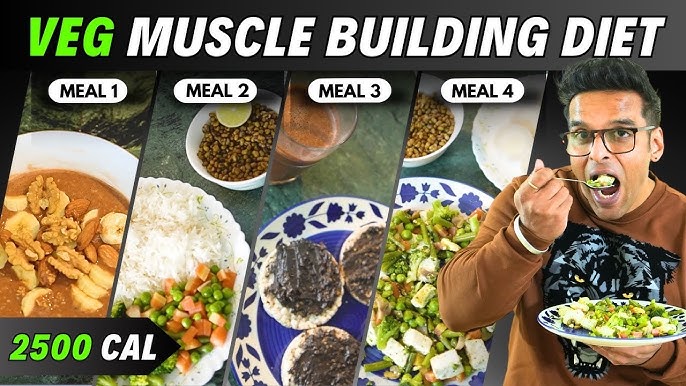
Maximum Hypertrophy: Building Muscle as an Indian Vegetarian
One of the most persistent myths in the fitness world is that you cannot build significant muscle on a vegetarian diet. In 2026, this myth has been throughly debunked by science and by thousands of elite Indian athletes who are reaching peak physical condition without meat. However, building muscle as a vegetarian does require more **Strategy and Precision**. You cannot simply ‘eat more dal’ and expect to grow. You must understand the science of amino acid profiles, protein quality, and the physiology of hypertrophy (muscle growth). This guide provides the ultimate roadmap for the modern Indian vegetarian to maximize muscle gain, optimize recovery, and build a world-class physique while staying true to their dietary heritage.
The Protein Problem: Quality and Quantity
To grow muscle, your body must be in a state of ‘Positive Nitrogen Balance.’ This requires consuming enough protein to provide the building blocks (amino acids) for repair. The challenge for vegetarians is twofold: **Bioavailability and Amino Acid Completeness**. Most plant proteins are missing one or more essential amino acids. To overcome this, Indian vegetarians must practice ‘Protein Combining’—pairing grains with legumes (like Khichdi) or consuming ‘Complete Proteins’ like **Paneer, Soy, and Quinoa**. In 2026, we aim for approximately 1.6g to 2.2g of protein per kilogram of body weight to support maximum muscle growth.
The Leucine Secret: The Anabolic Trigger
Not all amino acids are created equal when it comes to muscle growth. **Leucine** is the ‘Master Switch’ that triggers Muscle Protein Synthesis (MPS). Most plant proteins are significantly lower in leucine than animal proteins. To hit your ‘Leucine Threshold’ (about 2.5g – 3g per meal), vegetarians should lean heavily on **Soy/Soya Chunks, Dairy, and Whey Protein**. Soy is particularly potent in 2026 as it is the only plant source with a nearly perfect amino acid profile and high leucine content. Including a high-leucine source at every meal is the secret to ensuring your body is actually building muscle and not just maintaining it.
Managing the ‘Carb Trap’: Balancing Macros
The biggest mistake Indian vegetarians make is eating too many ‘Dirty Carbs’ (white rice, puris, and sugary snacks) in an attempt to hit their calorie targets. This leads to fat gain rather than muscle gain. In 2026, we advocate for **Strategic Carbon Loading**. Use complex carbs like **Oats, Sweet Potatoes, and Brown Rice** as your primary fuel source. These provide the sustained energy needed for intense training without the insulin spikes that drive inflammation. Remember, your goal is to be in a *slight* caloric surplus (around 200-300 calories above maintenance) to provide the energy for growth without excess fat accumulation.
Training for Growth: Progressive Overload
Regardless of your diet, muscle only grows when it is challenged. In 2026, the gold standard for hypertrophy remains **Progressive Overload**. This means consistently increasing the weight, reps, or intensity of your workouts over time. Your program should be built around big ‘Compound’ movements that recruit multiple muscle groups:
- Squats and Deadlifts: For lower body power and hormonal stimulation.
- Bench Press and Overhead Press: For upper body strength and shoulder health.
- Rows and Pull-ups: For a thick, healthy back.
Aim for 10-20 ‘Hard Sets’ per muscle group per week, focusing on a rep range of 6-12 for the perfect balance of strength and hypertrophy.
The Role of Supplementation: Bridging the Gap
In 2026, supplements are seen as ‘Functional Supports’ rather than magic pills. For a vegetarian looks to build muscle, three supplements are particularly valuable:
- Whey Protein: The fastest-absorbing protein with a perfect amino acid profile. Ideal for post-workout recovery.
- Creatine Monohydrate: The most researched supplement in history. It increases ATP production, allowing you to lift heavier and recover faster.
- Vitamin B12 and Zinc: Often missing in meat-free diets, these are essential for energy metabolism and natural testosterone production.
Recovery: The Third Pillar of Growth
You don’t grow in the gym; you grow in your sleep. Chronic stress and lack of sleep are the biggest muscle-killers in urban India. When you are stressed, your body produces **Myostatin**, a protein that inhibits muscle growth. To maximize your gains, you must prioritize **7-9 hours of High-Quality Sleep** and utilize stress-management tools like Yoga or meditation. Recovery is when the ‘Miracle’ of muscle repair happens. If you aren’t recovering, you aren’t growing—it’s as simple as that.
Conclusion: Your Strength, Your Legacy
Building a powerful, muscular body on a vegetarian diet is not just possible; it’s a testament to your discipline and your understanding of biology. By mastering your macros, training with intensity, and respecting your recovery, you are proving that strength doesn’t require sacrifice. In the India of 2026, a strong vegetarian body is a symbol of health, consciousness, and peak human performance. Start today—hit your protein goals, push those weights, and embrace the process. Your strongest self is waiting to be built. One meal and one rep at a time.
Your Muscle Mastery Check
Check your protein intake today. If it’s below 1.5g per kg of body weight, add a bowl of soya chunks or a scoop of whey protein to your plan tomorrow. Consistency is the only secret to success!