
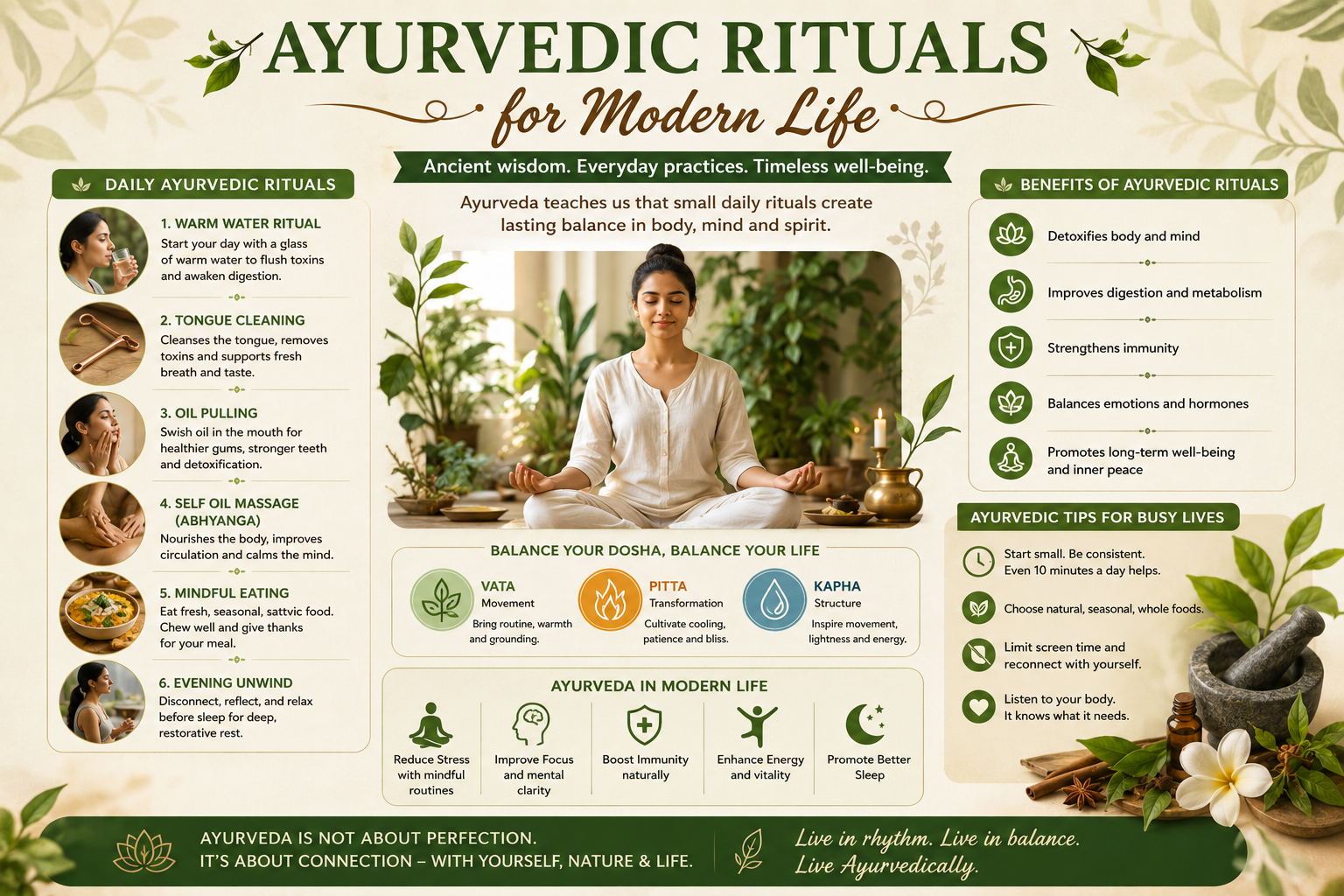
Ancient Wisdom for a Modern World: The Power of Dinacharya
In the frantic, digitally-driven landscape of 2026, many of us feel increasingly disconnected from our bodies and the natural rhythms of life. Chronic stress, irregular sleep, and poor digestion have become the ‘new normal.’ Ayurveda, India’s 5,000-year-old science of life, offers a profound solution through **Dinacharya**—a daily routine designed to align our internal biological clock with the natural cycles of the sun. These aren’t just ‘habits’; they are sacred rituals that ground the nervous system and promote long-term vitality. This guide explores the most essential Ayurvedic rituals that you can easily integrate into your busy 21st-century life for measurable improvements in health and mental clarity.
The Morning Detox: Tongue Scraping and Oil Pulling
According to Ayurveda, the mouth is the gateway to the body, and its health dictates the health of the entire digestive system. During the night, the body eliminates toxins (Ama) through the surface of the tongue. Simply brushing your teeth isn’t enough to remove this film. Using a **Copper Tongue Scraper** (Jivha Prakshalana) in the morning helps remove these toxins, improves your sense of taste, and stimulates the internal organs through the nerve endings on the tongue. Follow this with **Oil Pulling** (Gandusha)—swishing a tablespoon of virgin coconut or sesame oil for 5-10 minutes. This ancient practice is now scientifically proven to reach deep into the gums, drawing out bacteria and toxins while strengthening the jaw and improving oral hygiene.
Abhyanga: The Art of Self-Massage
In a world of constant movement, the act of slowing down for self-care is revolutionary. **Abhyanga** is the practice of massaging the entire body with warm oil before a bath. It is traditionally done with sesame oil (for Vata/Kapha balancing) or coconut oil (for Pitta cooling). Beyond just moisturizing the skin, Abhyanga calms the nervous system, stimulates the lymphatic system for better detoxification, and improves blood circulation. Even 10 minutes of self-massage can act as a powerful antidote to anxiety and physical exhaustion. It is an act of ‘Snehana’—a word that in Sanskrit means both ‘oiling’ and ‘loving.’ When you oil your body, you are literally nourishing it with love.
Agni: Keeping Your Digestive Fire Bright
Ayurveda teaches that ‘we are not what we eat, but what we digest.’ The digestive fire, or **Agni**, is the foundation of all health. To keep your Agni strong, follow these simple rules: Avoid drinking ice-cold water during meals, as it ‘puts out the fire.’ Instead, sip warm water or ginger tea. Eat comfortably without distractions—no phone or TV. Make lunch your largest meal of the day when the sun (and your Agni) is at its peak. By respecting your digestive fire, you reduce the formation of Ama (toxins) and ensure that every nutrient you consume is converted into Ojas (vital energy).
Ritucharya: Aligning with the Seasons
Nature changes, and so should our lifestyle. **Ritucharya** is the Ayurvedic practice of seasonal living. In the hot Indian summers, we should focus on cooling foods like watermelon, cucumber, and coconut water. In the cold winters, we move toward warming spices like ginger, cloves, and heavy fats like ghee. By eating local and seasonal produce, we are giving our bodies the specific constitutional support needed to withstand environmental changes. In 2026, with the impacts of climate change, staying in tune with our local ‘Ritus’ is more important than ever for maintaining a resilient immune system.
The 3 Pillars of Health: Ahara, Nidra, and Brahmacharya
Ayurvedic health rests on three fundamental pillars:
- Ahara (Diet): Choosing foods that are fresh, seasonal, and suited to your specific Dosha (Vata, Pitta, or Kapha).
- Nidra (Sleep): Aiming for a ‘Yogic Sleep’ where you go to bed by 10 PM and wake up early. The hours of sleep before midnight are twice as restorative for the brain.
- Brahmacharya (Energy Management): Not just celibacy, but the wise management of all your vital energies—avoiding sensory overload and over-exertion.
Grounding Techniques in the Digital Age
To offset the ‘light’ and ‘erratic’ energy of digital technology, we must incorporate grounding rituals. **Earthing**—walking barefoot on natural grass or soil—is a classic Ayurvedic practice that is now backed by grounding science for its ability to reduce inflammation and improve heart rate variability. If you work from home, take a 5-minute ‘Sun Break’ early in the morning. This resets your circadian rhythm and boosts your mood naturally. These small acts of connection with the elements are the ultimate ‘biohacks’ of the ancient world.
Conclusion: A Return to Your True Nature
Ayurveda is not a list of ‘don’ts’; it is a celebration of your unique nature. By adopting these daily rituals, you are reclaiming your health from a world that often views the body as a machine. You are a biological being in sync with a much larger universe. As you scrape your tongue, massage your skin, and respect your digestion, you will find a level of peace and vitality that no modern medicine can offer. Start with one ritual tomorrow morning, be consistent, and watch as your life begins to flow with grace and ease.